Interview: Frederick Moulaert and the Helloween Pumpkins
Interviewer: Janne Mattsson (Sweden Rock - 1995) *
Background and Beginnings
Janne: Could you tell us a bit about your background? What were you doing before you started drawing the iconic pumpkins for Helloween?
Frederick: I was actually still a student when I began working with them. Between 1985 and 1995, I was drawing for Belgian and French magazines like Tintin and Fluide Glacial. Simultaneously, I was working as a rock concert photographer for various publications across Belgium and France.
Janne: How did you first get in contact with the band?
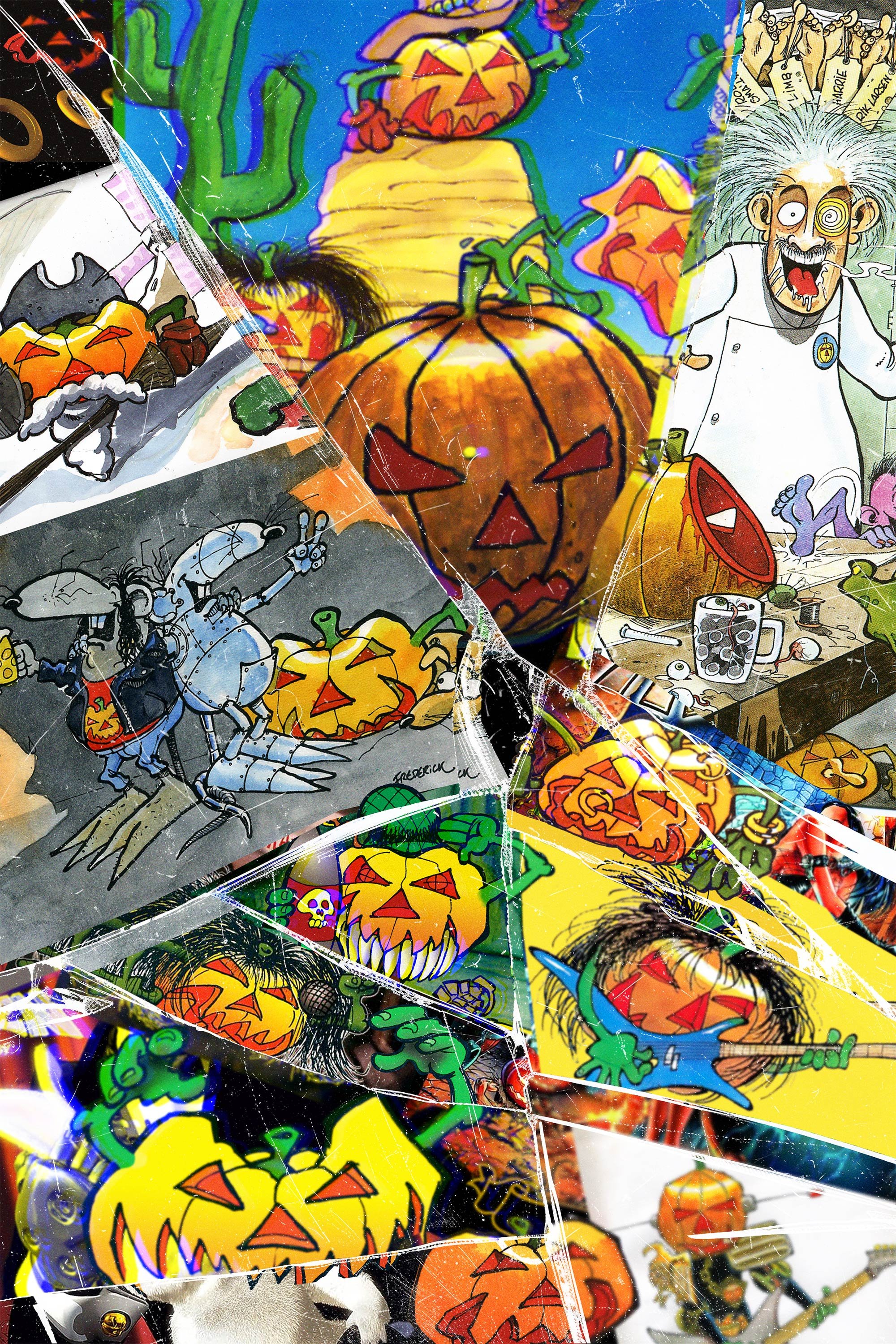
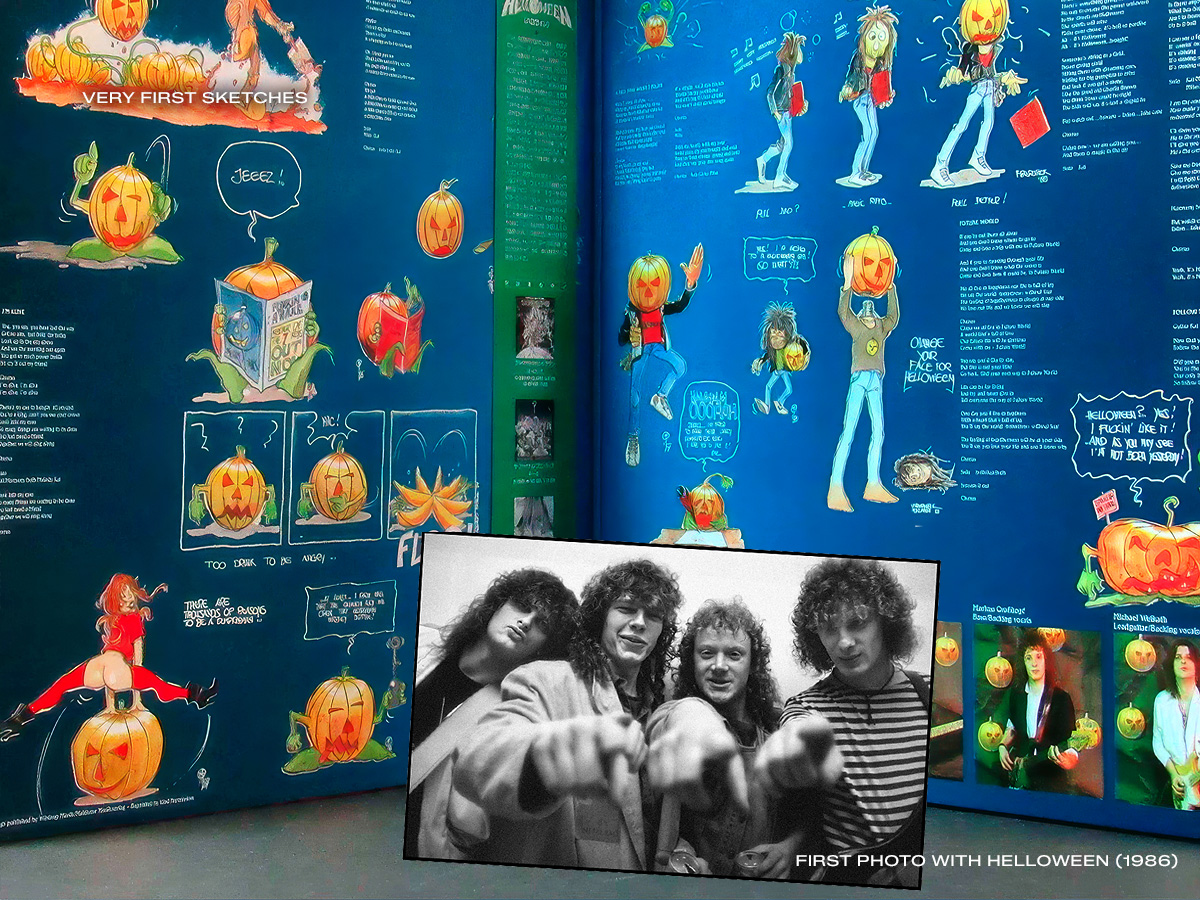
Frederick: I first met them after a concert in Belgium in March 1986. They were opening for Anthrax and Overkill at the time. I later wrote to the band and included some photos I’d taken of them, hoping they might use them for an album. At the end of the letter, I signed my name with a little "buzz" character with a pumpkin head. Michael [Weikath] liked it, and their management wrote back asking for more drawings like it.
Janne: Were you a fan of the band beforehand?
Frederick: Yes, I absolutely loved Helloween's music early on. That’s actually why I reached out to them in the first place.
Janne: Do you have any favorite songs from the first EP or Walls of Jericho?
Frederick: If I had to pick one, it would be "How Many Tears." But back then, you tended to love a whole album as a single piece of work, rather than focusing on individual tracks the way people do now.
The Creative Process
Janne: What was the band’s initial reaction when they saw your work?
Frederick: Michael was the first to write to me about it. After that, management started asking for more drawings at random for Keeper of the Seven Keys Part I, there wasn't really a formal brief. They even used a little drawing I did of myself as a pumpkin wearing a nightcap, which I’d placed next to my signature.
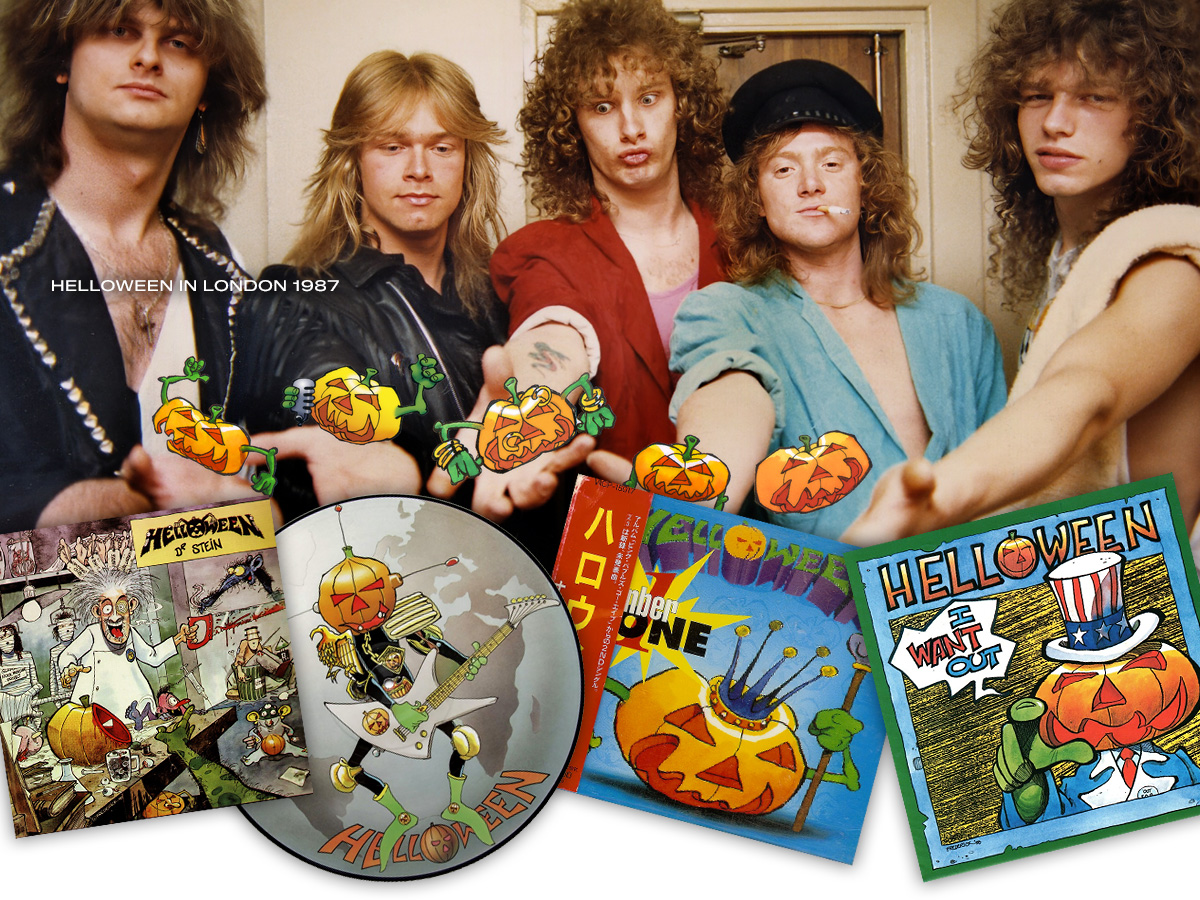
By Keeper Part II, they were sending me track titles, though still no lyrics. I tried to create a humorous drawing for each song. I remember meeting Kai [Hansen] in London in 1987 after a show; he asked if I smoked weed to come up with these ideas! I told him I didn't smoke anything at all, these creatures just came to me naturally.
Janne: From Keeper II onward, the drawings became very successful. How did your role evolve?
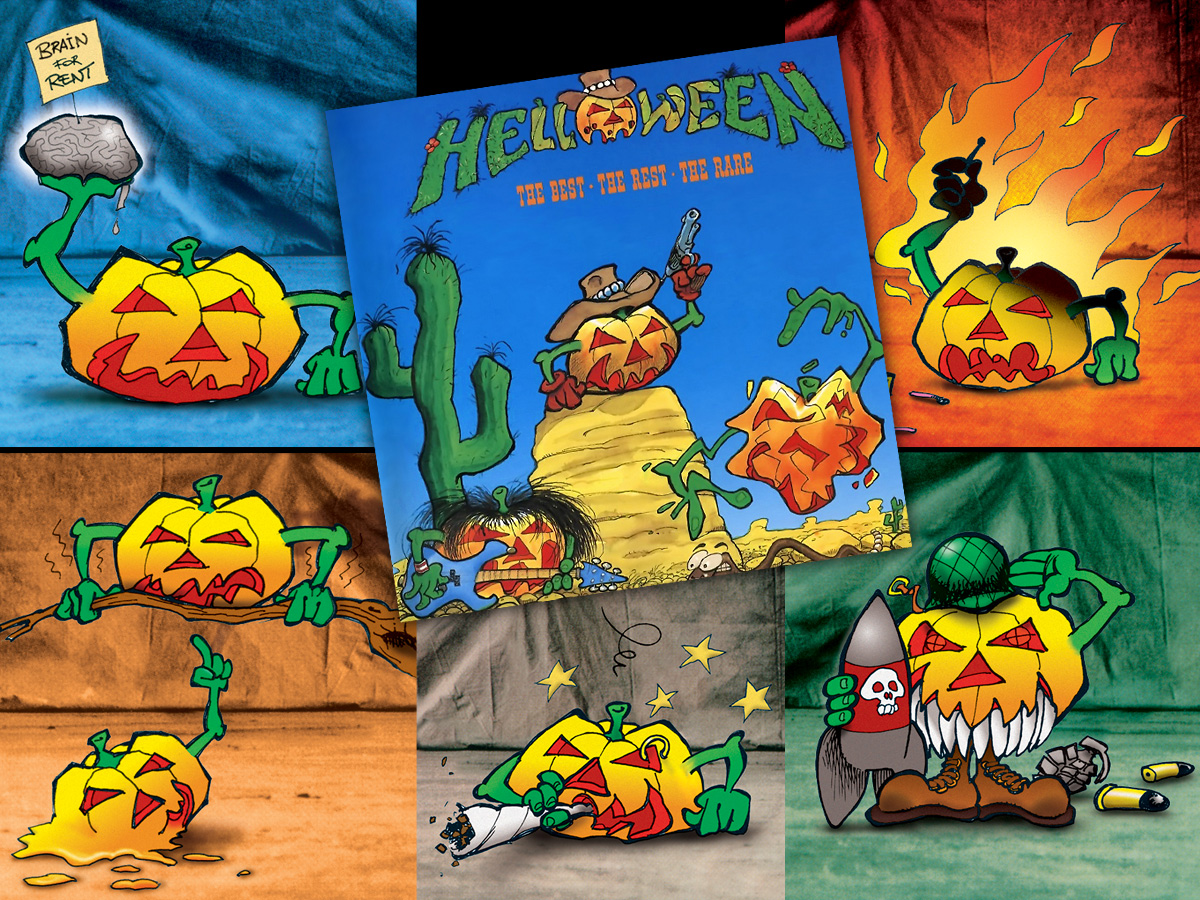
Frederick: I began drawing extensively for promotional merchandise and EPs. It was only later that I did the actual album covers, such as Live in the UK, The Best, The Rest, The Rare (a title I actually came up with), and Master of the Rings. For Chameleon and The Time of the Oath, I handled the page layouts and interior illustrations on my computer, though I wasn't involved with the front cover art for those specific records.
Janne: Did you receive much feedback or direction, or were you free to draw whatever you wanted?
Frederick: I was about 95% free. I received a little feedback on the album covers or singles, but for the most part, especially with the merchandise, they let me do my own thing.
Janne: Did the band ever provide sketches for you to "clean up" or improve?
Frederick: No. As I mentioned, they gave me total creative freedom.
Janne: Did you get to hear demos or read lyrics to help inspire the drawings?
Frederick: I received demo tapes, but never the lyrics. In the eighties, everything was handled via post or telex. Faxes didn't become common until the late eighties, and not everyone had one, luckily, my father did! Usually, they would just send the album and track titles, and I would send back black-and-white sketches.
Business and Legacy
Janne: Were you paid for your work? Do you recall if it was a flat fee or per drawing?
Frederick: I wasn't paid at the very beginning. (Keepers I) I did it for fun and was just happy they were using my art because I loved the music. Once the merchandise took off, they started paying me. It wasn't much at first, but it was plenty for a student living at home.
When I moved out in 1988, the demand increased for postcards, singles, and special editions for Japanese magazines. Helloween really helped launch my professional life from 1987 to 1997. It’s hard to remember the exact amounts because I was paid in Marks or Pounds and then converted them to Belgian Francs, but it was "fair money" for a young cartoonist.
Janne: What was your best-paid piece of work?
Frederick: That would be the Live in the UK cover. It was the first album under Sanctuary Music management (who also managed Iron Maiden). I was originally supposed to go on tour in the US with Helloween and Anthrax as an assistant to the tour manager, Harry Smits. However, Rod Smallwood of Sanctuary replaced me with one of his own guys. I was quite annoyed, so I asked for a lot of money for this particular album cover. He refused at first, so I told him, "Fine, don't use my artwork." The band backed me up, and management eventually paid. It was about 6,000–6,500 Euros in today’s value. I used that money to fund a 2.5-month holiday across the US.
Janne: Do you have a favorite pumpkin from the Walls of Jericho era?
Frederick: I actually didn’t draw anything for Walls of Jericho.
Janne: Of all the drawings you’ve done for them, which is your personal favorite?
Frederick: The singles for "Number One" and "Perfect Gentleman." Those were the first two drawings I scanned and colored on an Apple computer. The record company actually misprinted the first one! But those two are special because they represent the bridge between my hand-drawn art and the digital work I’ve done ever since.
*Sweden Rock Magazine is Scandinavia's biggest-selling hard rock magazine and Sweden's biggest-selling music magazine