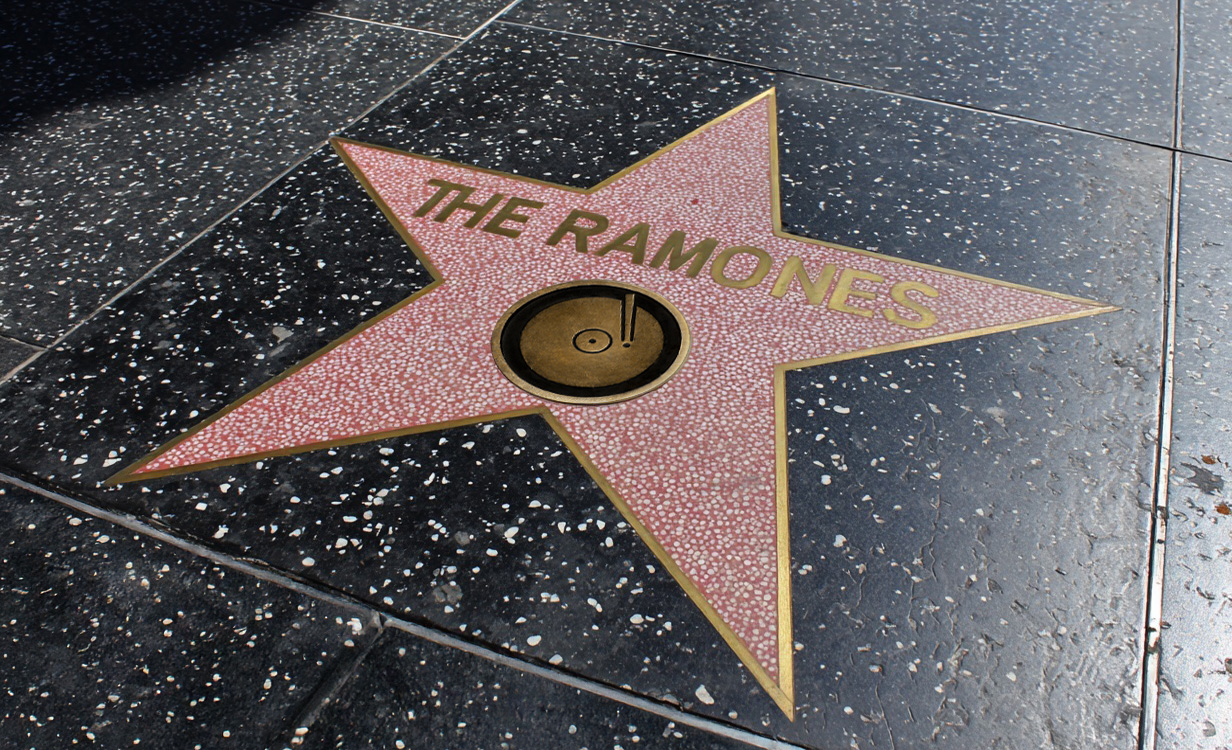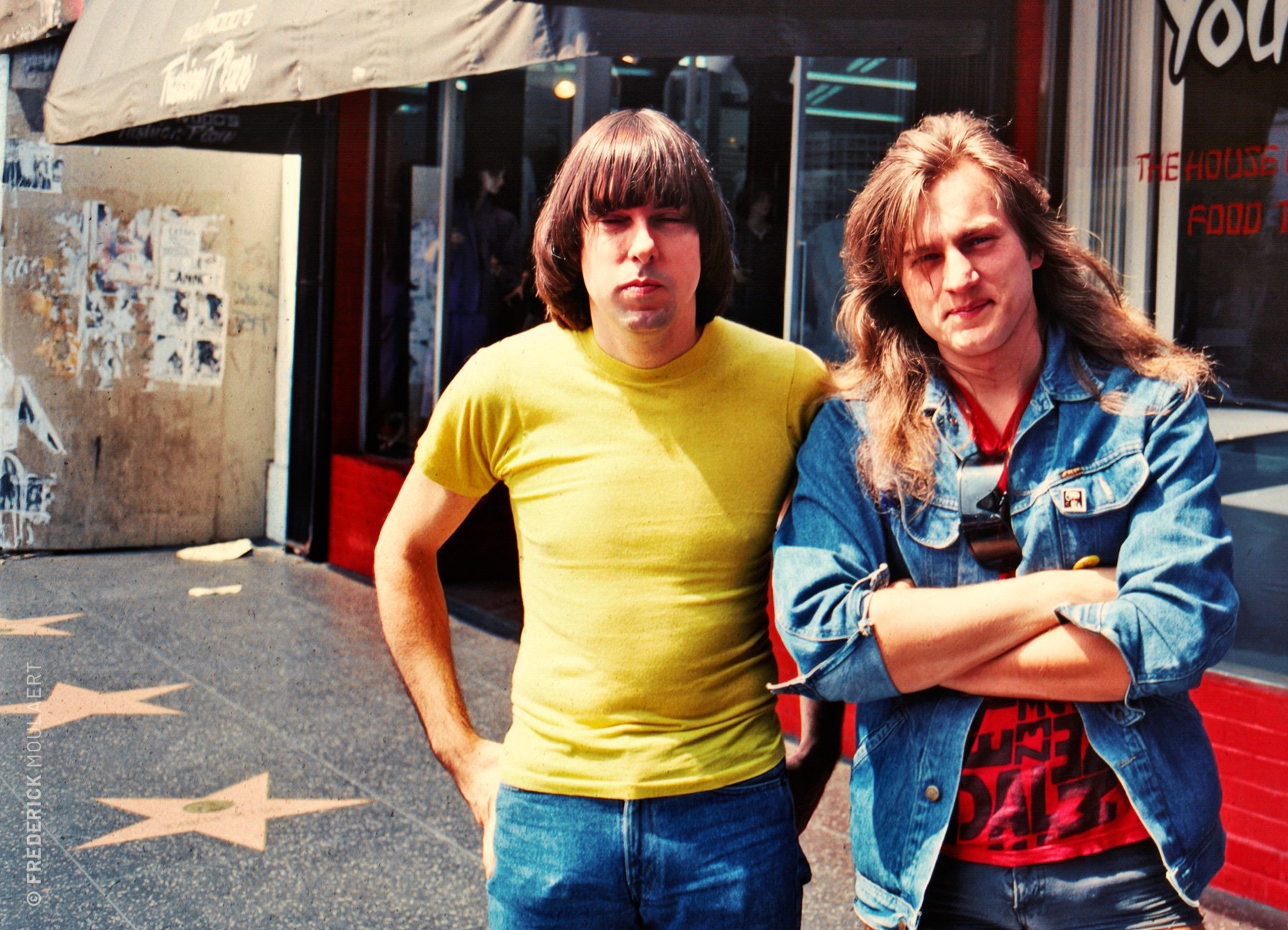
My very first trip to Los Angeles in September 1987 gifted me a memory I’ll never forget. I found myself standing on Hollywood Boulevard, right on the Walk of Fame, when I spotted Johnny Ramone (John William Cummings) stepping out of a second-hand record store.
I was hanging out with my friend James, who, true to form, was sporting his beat-up Chuck Taylors. Since Johnny was by himself and seemed to be in high spirits, we decided to take a chance and approach him. We chatted for a bit about what brought us all to Hollywood; James and I were fresh from Belgium, while he was the quintessential New York punk soaking up the California sun.
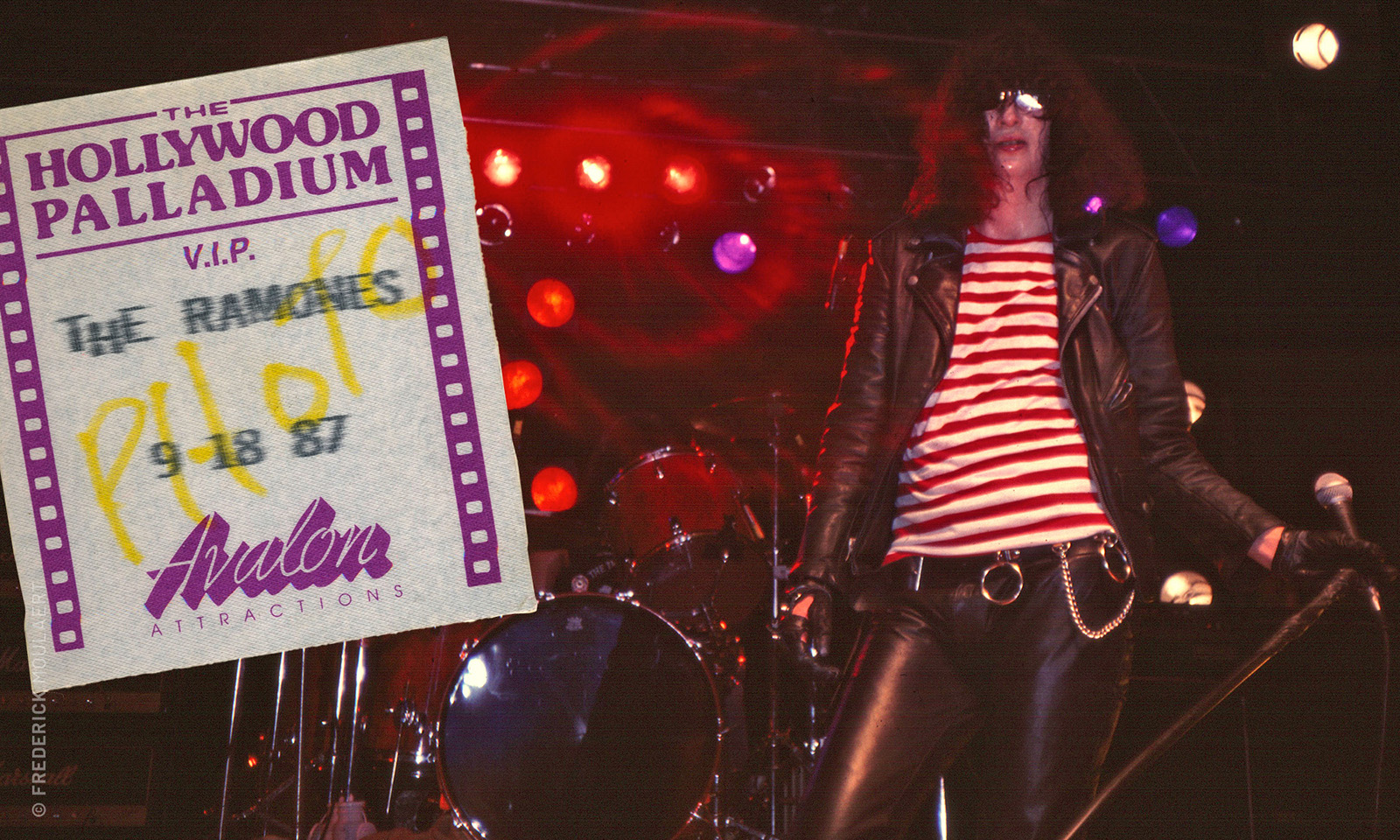
Johnny asked if we were coming to the show that night. Honestly, we had no idea the Ramones were even playing the Hollywood Palladium that night; Johnny was just killing time in the neighborhood after soundcheck. When we told him we’d only just arrived in the States and didn’t have tickets, he didn't miss a beat. He spontaneously offered to put us on the list. If we gave him our names, he promised three VIP passes, for James, his partner Jenny, and myself.
That night, we found ourselves at the Palladium, watching the Ramones tear through their set. Having just touched down in America for the first time, experiencing such genuine kindness from a legend was the ultimate welcome. It was a moment of pure, unexpected rock 'n' roll magic that has stayed with me ever since.
Johnny Ramone’s Legacy
Johnny Ramone didn’t just play guitar; he fundamentally redefined the instrument’s role in rock by stripping it down to its most aggressive, primal essence. His signature technique, relentless, high-speed downstrokes, created a percussive, machine-gun intensity that standard alternate picking simply couldn't replicate. By completely eschewing guitar solos and blues-based complexity in favor of high-gain, "wall-of-sound" power chords, he provided the definitive sonic blueprint for punk rock. Johnny proved that simplicity wasn’t a lack of ability, but a strategic choice, trading technical flourish for sheer velocity and raw, driving energy.
Though he once modestly explained to Metallica’s Kirk Hammett that his down-picking was simply the way he "kept time," that utilitarian habit effectively birthed an entire genre.
His influence spans generations of guitarists who realized that true power is often found in the most minimal movements. From James Hetfield’s legendary "Master of Downpicking" precision in Metallica and Billie Joe Armstrong’s driving pop-punk foundations in Green Day, to the rhythmic discipline of John Frusciante and the explosive energy of Dave Grohl, Johnny’s right hand remains the gold standard for rock 'n' roll momentum.